


Anuradhapura, Sri Lanka’s ancient capital and a UNESCO World Heritage Site, is often described as a city of ruins. But that description falls short. Anuradhapura is a living sacred city a place where history isn’t locked behind barriers and spirituality isn’t staged for visitors. Pilgrims still arrive at dawn, monks still chant beneath ancient trees, and rituals continue just as they have for centuries.
This guide shows you what to see, how to explore, and how to visit respectfully while helping you feel what makes Anuradhapura timeless.
Why Anuradhapura Feels Different
Many ancient cities feel preserved. Anuradhapura feels present. You’ll notice it in the silence between footsteps, in the white stupas glowing at sunset, and in the slow, barefoot movements of devotees. This isn’t a place to tick off sights. It’s a place to slow down.
If you want to understand Sri Lanka beyond beaches and hill-country views, this is where the island’s spiritual rhythm becomes clear.
Sacred Places You Must Visit in Anuradhapura
Sri Maha Bodhi
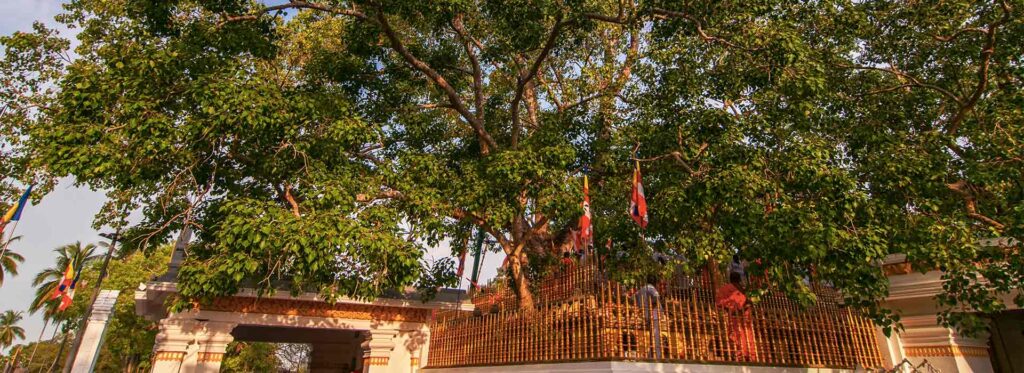
At the heart of the city stands Sri Maha Bodhi, the oldest living tree in the world with recorded history. Grown from a sampling of the Bodhi tree in India, it has been venerated for over 2,300 years.
Tip: Visit early morning or at dusk for a calmer atmosphere.
Ruwanwelisaya
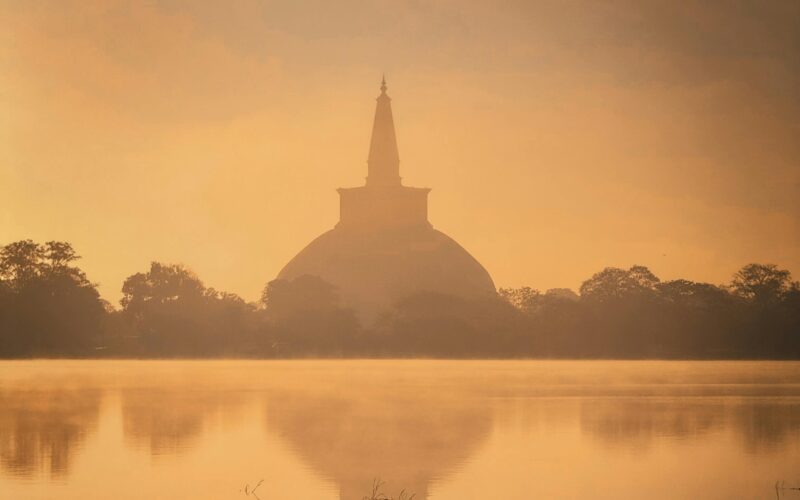
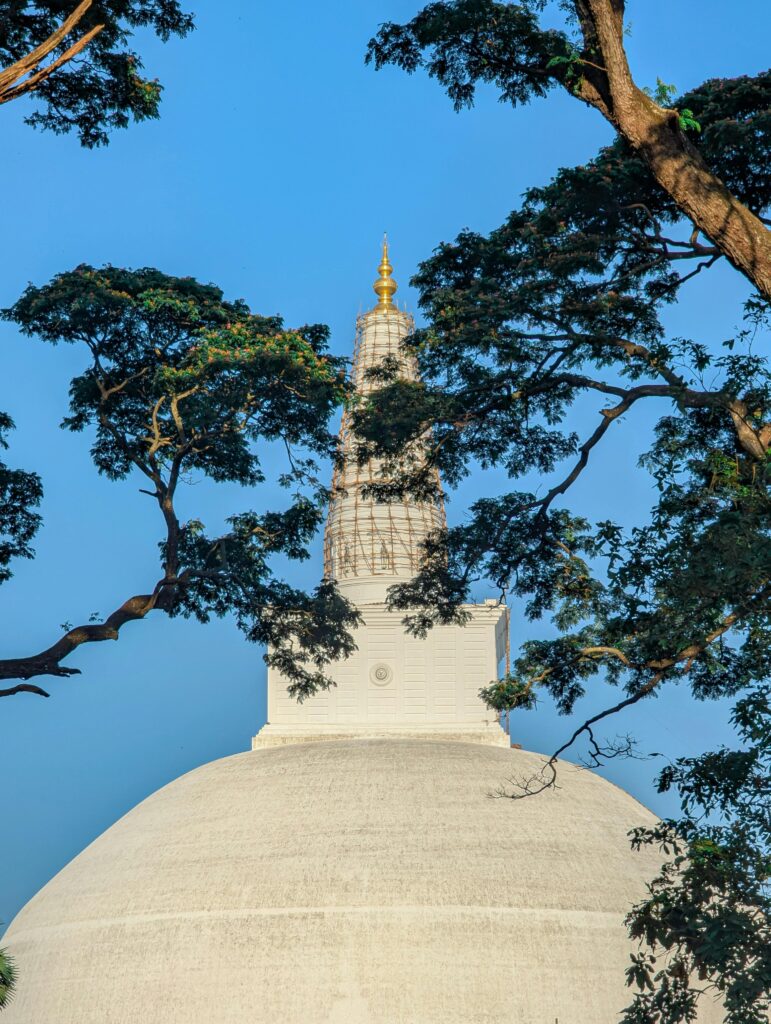
Ruwanwelisaya rises like a full moon against the sky. Built in the 2nd century BC, it’s one of the most sacred stupas in Sri Lanka. Sunset here is unforgettable golden light, quiet chanting, and a sense of stillness.
Jetavanaramaya
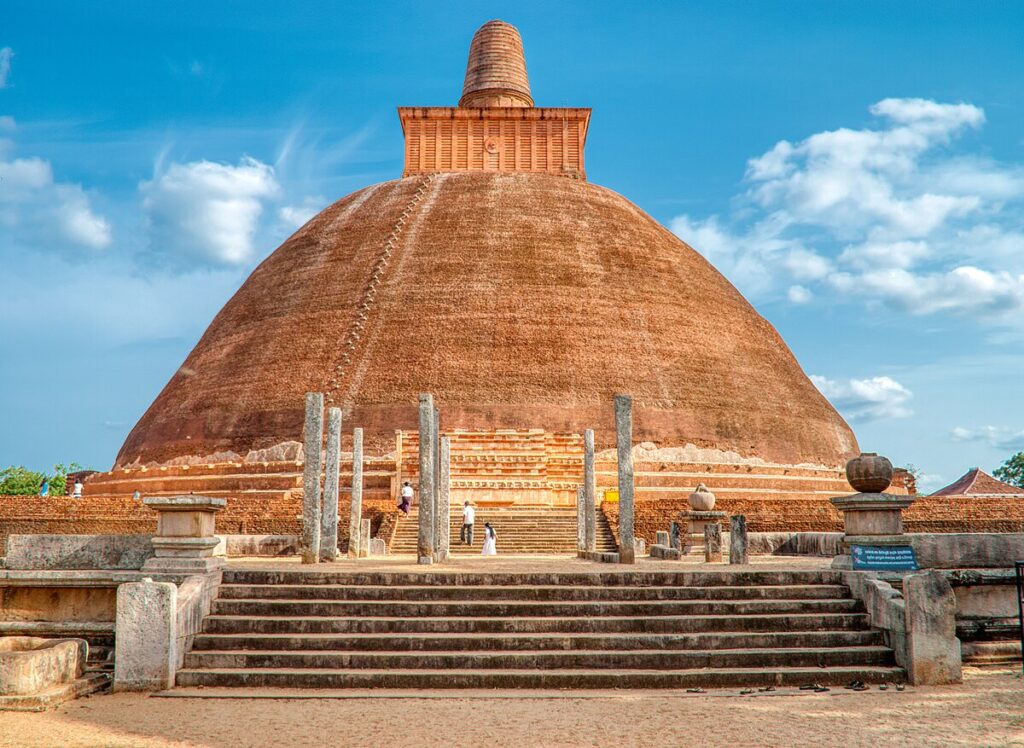
Once among the tallest structures in the ancient world, Jetavanaramaya reflects the ambition and engineering skill of early Sri Lankan civilization. Its sheer scale is humbling.
Abhayagiri Monastery
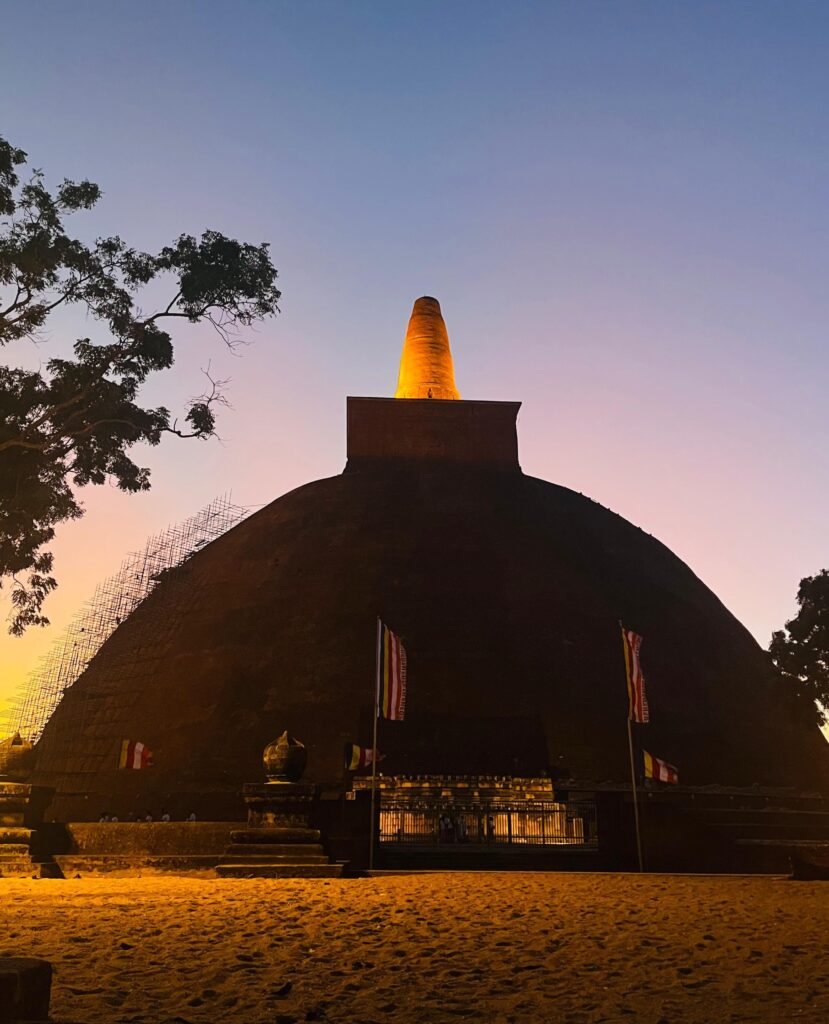
The expansive ruins of Abhayagiri Monastery feel peaceful and contemplative. Fewer crowds make it ideal for wandering and reflection.
How to Explore Anuradhapura
- Bicycle (recommended): Sites are spread out; cycling lets you move at your own pace.
- Tuk-tuk: Convenient if you’re short on time or visiting in midday heat.
- Guided tour: Best for deeper historical context.
Time needed: Half a day feels rushed a full day allows you to experience the city properly.
Dress Code & Etiquette (Please Read)
Anuradhapura is sacred ground.
- Cover shoulders and knees
- Remove shoes at temple areas
- Avoid posing on ruins or turning your back to statues for photos
- Speak softly observe how pilgrims behave
Respect is part of the experience. If you’re not dressed appropriately, a cloth will be provided to help cover exposed areas.
Best Time to Visit Anuradhapura
- Best months: May to September (drier weather)
- Best times of day: Early morning or late afternoon
- Poya (full moon) days: Spiritually rich but crowded
Midday heat can be intense plan breaks, hydrate, and wear a hat.
Is Anuradhapura Worth Visiting?
You’ll love it if you:
- Enjoy history with meaning
- Appreciate calm, spiritual places
- Want a deeper understanding of Sri Lanka
You might skip it if you:
- Prefer fast-paced itineraries
- Dislike heat and long walks
Practical Tips for First-Time Visitors
- Buy tickets at the main entrance
- Carry water, sunscreen, and a hat
- Follow photography guidelines
- Consider staying overnight to experience dawn or dusk
Final Thoughts
Anuradhapura doesn’t try to impress you.
It simply exists patient, sacred, and alive.
For travelers willing to slow down, it offers something rare the feeling that time isn’t lost here, only layered.